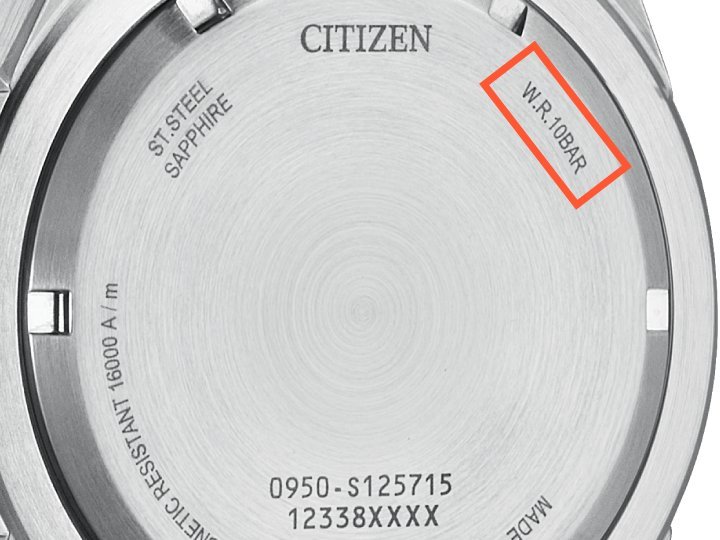
Most citizen watches can safely go in water, but your specific model’s ability to handle it depends entirely on its water resistance rating. You must check the case back of your watch to find the rating, as models marked with 3 bar or 5 bar are only splash-resistant, while those marked 10 bar or higher are suitable for swimming and water sports.
Checking your Citizen watch water rating
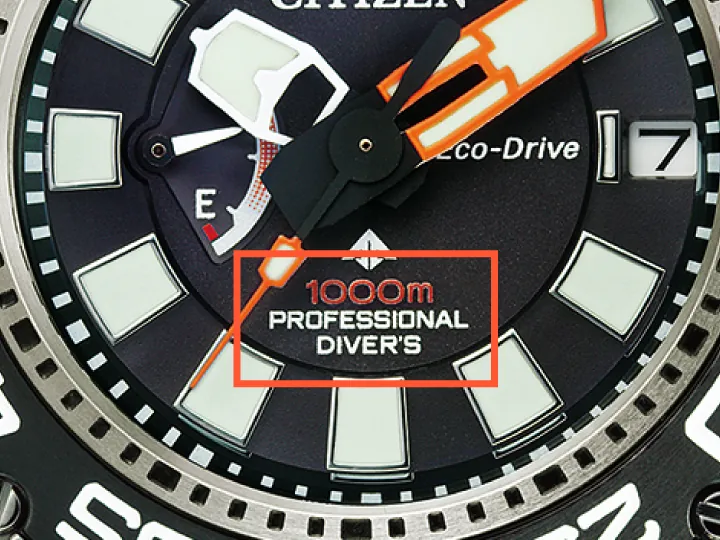
Before you take your watch into the water, you need to identify the exact limit defined by the manufacturer. You’ll find this information engraved on the back of the watch case, usually expressed in “bar,” “ATM,” or “meters.”
- Look for the marking: Turn the watch over and inspect the metal case back for text like “WR 50,” “10 BAR,” or “200M.”
- Match the rating to activity: Compare your finding against the standard usage chart to see if your watch can handle your planned activity.
- Check the crown: Ensure the crown is pushed all the way in against the case before any water contact, as an open crown allows water to bypass the seals.
- Avoid buttons: Never press the chronograph pushers or buttons while the watch is submerged, even if it’s rated for high pressure, because this action can force water past the gaskets.
- Rinse after use: Always rinse your watch with fresh, clean water after exposing it to salt water or pool chemicals to prevent corrosion of the seals.
Warning: Don’t wear a leather strap in the water, as the moisture will cause the material to rot, crack, and eventually break, which could lead to you losing your watch entirely.
Water resistance ratings explained
The following table outlines what these ratings actually mean for your daily activities. It’s important to understand that these numbers represent static laboratory pressure and don’t necessarily account for the dynamic force of moving water while swimming or diving.
| Rating | Suitable Activities | Not Recommended |
|---|---|---|
| 3 Bar (30m) | Hand washing, light rain | Swimming, showering |
| 5 Bar (50m) | Showering, shallow swimming | Diving, water sports |
| 10 Bar (100m) | Swimming, snorkeling | Scuba diving |
| 20 Bar (200m) | Scuba diving, jet skiing | Deep-sea saturation diving |
Why water resistance changes over time
Even if your watch is rated for high pressure, it won’t stay that way forever. The rubber gaskets that keep water out of the internal movement will eventually dry out, shrink, or crack over several years of use. This degradation happens faster if you frequently expose the watch to extreme heat, such as in a sauna or hot tub, which causes the metal and rubber to expand and contract at different rates.
According to the International Organization for Standardization, water-resistant watches should be inspected and tested by a professional based on usage and the manufacturer’s manual to ensure the seals remain intact.
Related guides
Frequently Asked Questions
Can I wear my watch in a hot tub?
No, you should avoid wearing your watch in hot tubs or saunas. The high heat can cause the rubber gaskets to expand and lose their seal, which lets moisture inside even if the watch has a high pressure rating.
What should I do if water gets inside?
If you see fog or droplets under the watch face, take it to a qualified watchmaker as soon as possible. Don’t try to dry it out by heating the watch, as this often pushes water deeper into the movement or causes the internal lubricant to harden.
Does water resistance cover salt water?
Yes, but you must rinse the watch thoroughly with fresh water afterward. Salt is highly corrosive and will damage the gaskets and the watch casing if it’s allowed to dry and crystallize in the crevices around the crown and buttons.
Conclusion
Take a moment today to locate the specific water resistance rating engraved on the back of your watch case and write it down in a note on your phone. This simple step ensures you’ll always know exactly which environments your watch can handle before you decide to wear it near water.